
Introduction
In today’s digital world, businesses have many ways to connect with customers, but email marketing remains one of the most effective and reliable digital marketing strategies. Whether you run a small local business, an e-commerce store, an educational institution, or a growing company, email marketing can help you build relationships, generate leads, promote products and services, and increase customer retention.
Unlike social media platforms, where businesses depend on algorithms to reach their audience, email marketing allows you to communicate directly with people who have shown interest in your business.
At Smart Score Digital, we understand that successful digital marketing is not just about getting attention. It is about turning attention into meaningful customer relationships and measurable business growth. A well-planned email marketing strategy can help businesses stay connected with their audience and encourage them to take action.
In this guide, we will explore what email marketing is, how it works, its benefits, different types of email campaigns, best practices, and how Smart Score Digital can help businesses use email marketing effectively.
What Is Email Marketing?
Email marketing is a digital marketing strategy that involves sending targeted emails to customers, prospects, subscribers, or leads.
Businesses use email campaigns to:
- Promote products and services
- Generate leads
- Share company updates
- Send special offers and discounts
- Educate customers
- Build brand awareness
- Drive traffic to websites
- Increase sales
- Maintain customer relationships
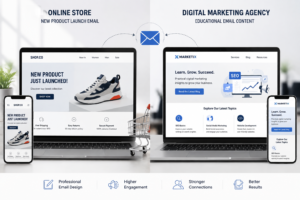
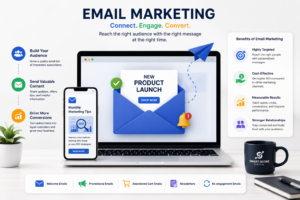
For example, an online store may send an email about a new product launch, while a digital marketing agency may send educational content about SEO, social media marketing, or website development.
The goal is not simply to send more emails. The goal is to send the right message to the right audience at the right time.
Why Is Email Marketing Important for Businesses?
Email marketing continues to be valuable because it provides businesses with a direct communication channel.
A person who subscribes to your email list has already shown some level of interest in your business. This makes email an excellent platform for nurturing that interest and gradually moving prospects toward becoming customers.
1. Direct Communication
Email allows businesses to communicate directly with their audience without relying completely on social media algorithms.
2. Builds Customer Relationships
Regularly providing useful information helps businesses remain connected with customers and build trust over time.
3. Generates Leads
Email campaigns can be used to collect and nurture leads through newsletters, downloadable resources, offers, and enquiry forms.
4. Supports Sales
Promotional emails can introduce products, services, offers, and limited-time deals to potential customers.
5. Improves Customer Retention
Businesses can use email to keep existing customers engaged through helpful content, product updates, loyalty offers, and personalized communication.
How Does Email Marketing Work?
A successful email marketing campaign usually involves several important steps.
Step 1: Build an Email List
The first step is creating a permission-based email list. Businesses can collect email addresses through:
- Website forms
- Landing pages
- Contact forms
- Newsletter subscriptions
- Lead-generation campaigns
- Online events
- Free resources or downloads
Building a quality email list is more valuable than simply collecting a large number of email addresses.
Step 2: Understand Your Audience
Different customers have different needs. Segmenting your audience allows you to create more relevant messages.
For example, a business could separate its audience into:
- New leads
- Existing customers
- Repeat customers
- Interested prospects
- Inactive subscribers
Step 3: Create Valuable Content
Your email should provide a reason for the recipient to open and read it.
Content could include:
- Educational information
- Special offers
- Product announcements
- Company news
- Industry tips
- Case studies
- Blog updates
- Event invitations
Step 4: Design the Email
A professional email should be visually clean, mobile-friendly, and easy to understand.
The email should generally include:
- A clear subject line
- A strong opening
- Short paragraphs
- Relevant visuals
- A clear call-to-action
- Business contact information
Step 5: Send at the Right Time
Timing can influence email engagement. Businesses should test different days and times to understand when their audience is most responsive.
Step 6: Analyze the Results
After sending a campaign, businesses should monitor important metrics such as:
- Open rate
- Click-through rate
- Conversion rate
- Bounce rate
- Unsubscribe rate
- Revenue generated
These insights help improve future campaigns.
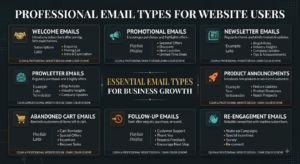
Types of Email Marketing Campaigns
There is no single type of email campaign that works for every business. Different campaigns serve different purposes.
Welcome Emails
Welcome emails are sent after someone subscribes to a newsletter, submits an enquiry, or joins a mailing list.
A good welcome email introduces the business and tells subscribers what they can expect.
Promotional Emails
Promotional emails are designed to encourage customers to purchase a product or service.
Examples include:
- Seasonal offers
- Discounts
- New service launches
- Limited-time deals
- Festival promotions
Newsletter Emails
Newsletters allow businesses to regularly share useful information with their subscribers.
A newsletter might include blog articles, industry insights, company updates, tips, and announcements.
Product or Service Announcement Emails
When a business launches a new product or service, email can be an effective way to reach existing customers and interested prospects.
Abandoned Cart Emails
E-commerce businesses can use abandoned cart emails to remind customers about products they added to their shopping cart but did not purchase.
Follow-Up Emails
Follow-up emails are useful after an enquiry, purchase, consultation, event, or download.
They help maintain communication and encourage the customer to take the next step.
Re-Engagement Emails
Some subscribers may stop opening emails over time. Re-engagement campaigns can be used to reconnect with inactive subscribers.
Benefits of Email Marketing
Cost-Effective Marketing
Compared with many traditional advertising methods, email marketing can be relatively cost-effective, especially when campaigns are properly planned and targeted.
Personalized Communication
Businesses can personalize emails using customer names, interests, previous interactions, or purchasing behavior.
Personalization can make communication feel more relevant and customer-focused.
Increased Website Traffic
Emails can direct subscribers to important website pages, blog posts, landing pages, products, or service pages.
Better Lead Nurturing
Not every lead is ready to purchase immediately. Email marketing allows businesses to provide useful information and gradually nurture leads.
Measurable Performance
One of the biggest advantages of digital marketing is the ability to measure performance. Email platforms can provide useful data about how subscribers interact with campaigns.
Email Marketing and SEO: Do They Work Together?
Email marketing and SEO are different digital marketing strategies, but they can support each other.
For example, a business can use an email newsletter to promote a newly published blog article. This can increase awareness and encourage subscribers to visit the website.
A strong content strategy can therefore combine:
SEO → Website Content → Email Subscribers → Email Campaigns → Website Traffic → Leads and Customers
At Smart Score Digital, we believe digital marketing works best when different channels support one another rather than operating separately.
Email Marketing Best Practices
Write Strong Subject Lines
The subject line is one of the first things recipients see. Keep it clear, relevant, and interesting without making misleading claims.
Keep Emails Simple
Avoid overwhelming readers with too much information. Use headings, short paragraphs, bullet points, and clear sections.
Use a Clear Call-to-Action
Every marketing email should have a purpose.
Examples of calls-to-action include:
- Get a Quote
- Learn More
- Book a Consultation
- Shop Now
- Read the Blog
- Contact Us
Make Emails Mobile-Friendly
Many people read emails on smartphones. Your email should therefore be responsive and easy to read on smaller screens.
Personalize Where Appropriate
Personalized emails can make communication more relevant. However, personalization should always be useful and natural rather than excessive.
Maintain a Consistent Brand Identity
Use your company’s colors, fonts, tone, and visual style consistently so customers can easily recognize your brand.
Respect Customer Privacy
Only send marketing emails to people who have appropriately opted in. Businesses should also provide a clear way for subscribers to unsubscribe.
Common Email Marketing Mistakes to Avoid
Even a well-designed campaign can perform poorly if basic mistakes are made.
Sending Emails Without Permission
Avoid purchasing random email lists or sending unsolicited marketing messages.
Sending Too Many Emails
Bombarding subscribers with frequent messages can lead to unsubscribes and reduced engagement.
Using Misleading Subject Lines
A subject line should accurately represent the content of the email.
Ignoring Mobile Users
An email that looks good on a desktop but is difficult to read on a phone can negatively affect engagement.
Not Testing Campaigns
Businesses should test different subject lines, designs, CTAs, and content to understand what works best.
Focusing Only on Sales
If every email asks customers to buy something, subscribers may lose interest. A healthy email strategy should balance promotional content with useful and educational information.
How Smart Score Digital Can Help With Email Marketing
At Smart Score Digital, we help businesses build a stronger online presence through practical and result-focused digital marketing strategies.
Our email marketing approach can include:
- Email campaign planning
- Audience segmentation
- Email content creation
- Professional email design
- Promotional campaign creation
- Lead nurturing campaigns
- Newsletter content
- Campaign scheduling
- Performance monitoring
- Conversion-focused CTAs
We can also integrate email marketing with other digital marketing services such as SEO, social media marketing, website development, Google Business Profile optimization, and content marketing.
This integrated approach helps create a consistent customer journey across different digital channels.
Email Marketing for Small Businesses
Small businesses often have limited marketing budgets, making efficient customer communication extremely important.
Email marketing can help local businesses stay connected with customers after an enquiry or purchase.
For example, a local business can use email to:
- Announce new services
- Share special offers
- Promote events
- Send customer updates
- Share useful tips
- Encourage repeat purchases
- Request feedback
With a well-planned strategy, even a small business can use email marketing to build a loyal customer base.
Email Marketing for E-Commerce Businesses
For e-commerce businesses, email marketing can play an important role throughout the customer journey.
Businesses can send:
- Welcome emails
- Product recommendations
- Promotional offers
- Abandoned cart reminders
- Order updates
- Post-purchase emails
- Customer loyalty campaigns
This allows businesses to communicate with customers before, during, and after a purchase.
How to Measure Email Marketing Success
Sending an email is only the beginning. Measuring results is essential for improving performance.
Open Rate
Shows how many recipients opened the email.
Click-Through Rate
Measures how many recipients clicked a link or call-to-action within the email.
Conversion Rate
Shows how many recipients completed the desired action, such as making a purchase or submitting an enquiry.
Bounce Rate
Shows the percentage of emails that could not be delivered.
Unsubscribe Rate
Shows how many subscribers opted out after receiving an email.
Return on Investment
Businesses can compare campaign costs with the revenue or value generated from email marketing.
Frequently Asked Questions About Email Marketing
Is email marketing still effective?
Yes. Email remains a useful channel for businesses to communicate directly with interested customers, nurture leads, promote products, and maintain customer relationships.
How often should a business send marketing emails?
There is no universal frequency. The ideal schedule depends on your audience, industry, content, and campaign goals. Consistency and value are more important than simply sending emails frequently.
Is email marketing suitable for small businesses?
Yes. Small businesses can use email marketing to nurture leads, communicate with customers, promote offers, and encourage repeat business.
Can email marketing generate leads?
Yes. Businesses can use newsletters, lead magnets, website forms, landing pages, and targeted campaigns to generate and nurture leads.
Can Smart Score Digital help with email marketing?
Yes. Smart Score Digital can help businesses plan email campaigns, create content, design professional emails, develop lead-nurturing strategies, and monitor campaign performance.
Conclusion
Email marketing is more than sending promotional messages. It is a powerful way to build relationships, nurture leads, communicate with customers, and support long-term business growth.
When combined with SEO, social media marketing, website development, content marketing, and other digital strategies, email marketing can become an important part of a complete online marketing system.
At Smart Score Digital, our goal is to help businesses use digital marketing strategically—not simply to generate clicks, but to create meaningful connections and measurable opportunities.
If your business wants to build a stronger online presence and connect with customers more effectively, Smart Score Digital can help you create a digital marketing strategy designed around your business goals.
Ready to Grow Your Business Online?
Connect with Smart Score Digital today and explore how email marketing and other digital marketing services can help your business attract, engage, and convert more customers.